By Daryl Li
Grateful for the generous support from the IHE and the CUA School of Philosophy, I journeyed to Savannah, Georgia to deliver a paper at the Southwestern Philosophical Society’s (SWPS) 87th Annual Meeting on 21 November 2025. Dedicated to providing a pluralistic and open forum for philosophical research, the SWPS welcomes papers on any philosophical topic from any major philosophical tradition. All submitted papers are subject to anonymous peer review from two scholars and also receive a commentary. Presented papers are published in the Southwest Philosophy Review.
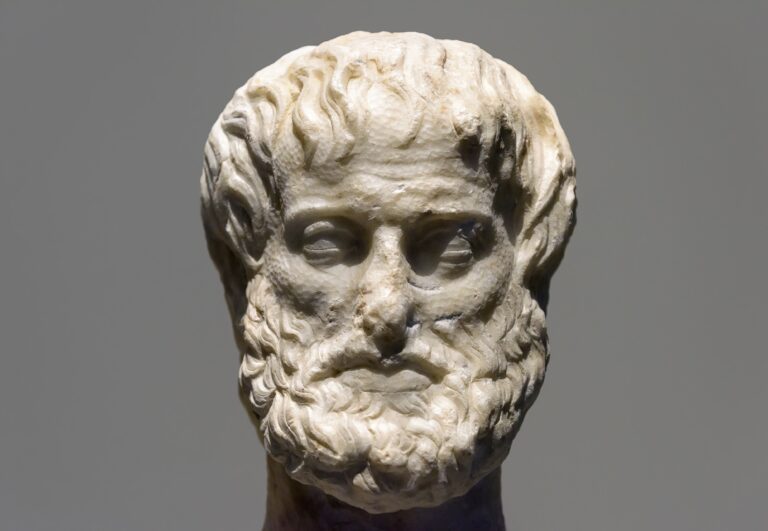
For my presentation, I argued for a reconciliatory interpretation of Aristotelian natural justice in the Nicomachean Ethics, where he presents the seemingly contradictory account that natural justice is both mutable and immutable.1 My interpretation pushes back against current scholarship, which reads natural justice as exclusively mutable or immutable. In my view, this exclusivist reading is inadequate because it cannot account for the natural in natural justice. Scholars who read natural justice as immutable ground it in divine perfection, identifying it with the unchanging standard among the gods. However, since the gods are supernatural, that is, above nature, it is difficult to see how justice issuing from their divine status is natural at all. Conversely, scholars who take natural justice to be exclusively mutable trace it back to customs and mores that generally determine what is just because they require little or no effort to develop.2 However, customs are conventional by definition so, once again, where is the natural in natural justice? Furthermore, customs aligned with vices such as cowardice and temperance are easier but lead us to injustice: the cowardly desert their posts; the intemperate commit adultery.
I propose interpreting Aristotelian natural justice as the exercise of our virtues for the sake of the common good. Without delving too much into the specifics of Aristotelian ethics, I will simply add that virtuous action has two aspects: the principle of the mean constituting its immutability, and the execution of the virtuous action that varies according to different customs. For instance, when an Athenian or Persian desires to exercise the virtue of magnificence, their actions must be circumscribed by the mean if magnificence is to be obtained. Their gifts have to be sufficiently lavish for the community, but not so lavish that their gifts become vulgar and gaudy.3 Yet, because of their respective customs, they perceive different kinds of actions to be sufficiently lavish: for Athenians it is the donation of a trireme4 whereas Persians consider the civic feast the equivalent.5
In lieu of this description of virtue, justice as a superintendent virtue should, unsurprisingly, mirror personal virtue in its relation to the mean. Generally, the substance of justice does not differ from virtue; the difference lies only in their respective orientations. When virtue is considered in terms of a person’s character disposition or state, it is virtue; when that same virtue is oriented toward the good of others, it is justice.6 The man who consumes an amount of food that accords with the mean relative to him is simply temperate. Another man who does the same but also with the consideration that others are not deprived of their fair share at a banquet is temperate and just. Understood as such, the mutability and immutability of Aristotelian natural justice clearly pertain to different aspects.
Aristotelian natural justice is necessary for the human soul to mature because it shifts the locus of responsibility and justice back to the agent by getting him to first confront the question of whether his interactions with others cohere with the ends of moral virtue. It rejects the common but mistaken notion that justice is a purely legalistic endeavor, and only serves as an instrument to regulate the behavior of individual citizens whose primary concern is their private goods. The truly just man, in grappling with the inherent complexities of moral deliberation, cannot hide from himself because his passions and actions must align with the morally virtuous end. It is in this honest confrontation with himself that he matures as a human being capable of reining in his passions in the face of temptation from vice for the sake of noble virtue. Each time he deliberates and chooses rightly, he instantiates the fact that he is the only natural being capable of reason and morality. In so doing, he reifies his human being.
Natural justice also reminds us that our flourishing is ineluctably tied up with the community we live in. Aristotle understands human flourishing (eudaimonia) as coeval with virtuous activity.7 The naturally just man who recognizes his political community as the natural horizon8 within which his flourishing is made possible will therefore take pains to ensure that he deals justly with his fellow citizens whether or not the law is watching. This reinstates the primacy of the common good as the proper object of communal human life. Hobbes may have gifted us the theoretical foundations of the modern state with all its conveniences, but it exacts a price by reducing man to an atomistic being, and the political community is merely an amalgamation of said atomistic-citizens. In contrast, Aristotle understands political life as a life where virtuous activity constitutes the lifeblood that animates the relations between citizens. Just as the organ flourishes when the body flourishes, so, too, citizen-man alongside his political community.
On a personal note, I reflect on my immense and deep love for the idea of America in relation to natural justice. To me, Americanism is defined by its commitment to the ideals of liberty, and the American spirit is well and alive in someone insofar as he subscribes to the principles enshrined in the Declaration of Independence and the Constitution. Therein lies America’s vitality and strength. I am convinced that for America to retain its vitality and strength, Aristotelian natural justice has an essential role to play because a body politic that possesses naturally just souls constitutes the resilient first line of defense against forces that seek to undermine it.
1 Aristotle, Nicomachean Ethics, 2nd ed., trans. Joe Sachs (Focus Publishing, 2002), 5.7.1134b18–33.
2 See: Peter Simpson, “Aristotle on Natural Justice,” Studia Gilsoniana 3, (2014): 372; Gabriela Remow, “Aristotle, Antigone, and Natural Justice,” History of Political Thought 29, no. 4 (Winter 2008): 592–95.
3 EN 4.2.1122b5–8.
4 Ibid., 4.2.1122b24–25.
5 Xenophon, The Education of Cyrus, trans. Wayne Ambler (Cornell University Press, 2001), 2.3.23.
6 EN 5.1.1129b27–28
7 EN 1.7.1098b15–18.
8 Aristotle, Aristotle’s Politics, 2nd ed., trans. Carnes Lord (University of Chicago Press, 2013), 1.2.1253a2.